53" Cutting Width, Drum Mower for Tractor, DM53
+ Show More
SKU: 113102B | Model: DM53

53" Cutting Width, Drum Mower for Tractor, DM53

Sale price$2,299.00
Regular price$2,599.00
Save $300

FREE SHIPPING

EST. 11-14 Days Delivery
Learn More
Optional Working width: 53 in
Availability: In Stock
In stock —— Leaves Warehouse Within 1 Week
Ships from U.S. Warehouses Learn More

12-Month warranty included

4.6★ Verified Customer Reviews
U.S.Based Support

Product Overview

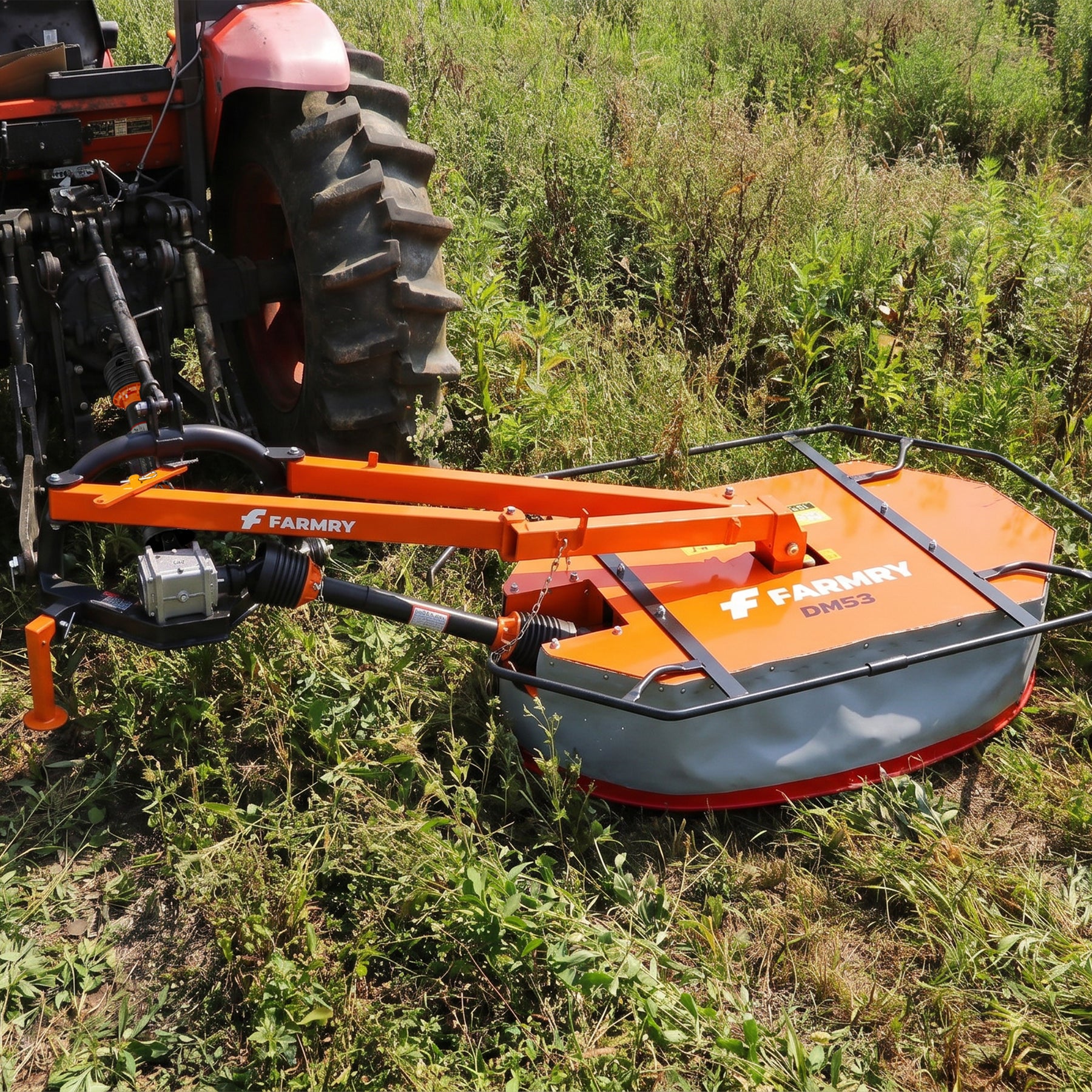
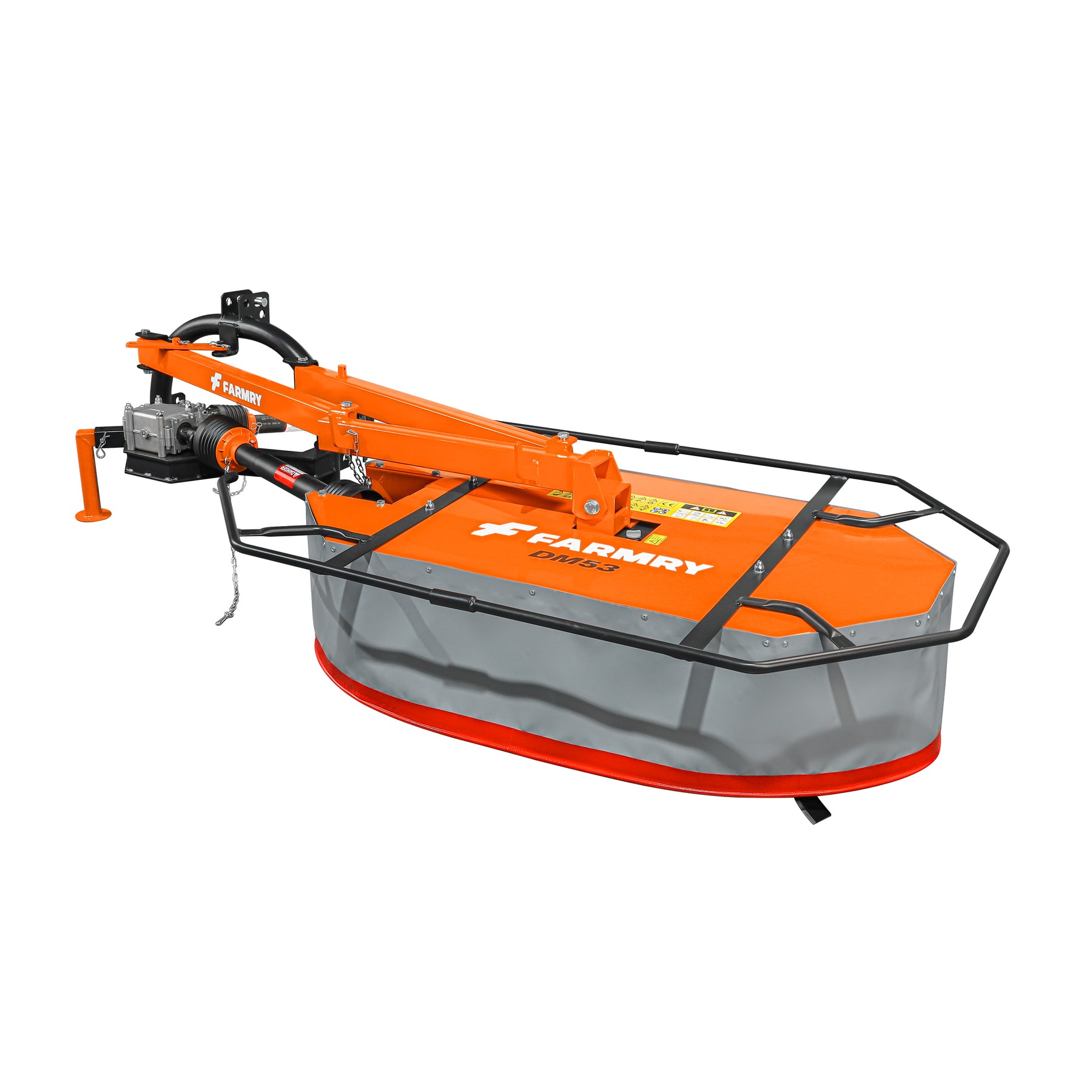
The DM53 mower is specially developed for small and medium-sized farms, compatible with 15–40HP tractors and driven by low power. It is a perfect choice for silage and hay harvesting, as well as cutting all kinds of forage crops, pasture, lawns and roadside wild plants.

Boasting a working width of 1.35m (53"), it adopts a double-drum counter-rotating structure for precise and clean cutting, with harvested crops neatly laid in windrows to support convenient subsequent drying and baling.

It integrates high working efficiency and economic benefits, cutting fuel consumption significantly while guaranteeing harvesting efficiency to help lower production costs.

Fitted with 8 manganese steel blades that feature high hardness, strong wear resistance and simple assembly/disassembly, the mower is equipped with a protective skirt to effectively control flying debris and ensure safe operation.

The machine has a solid and durable structure, and only routine basic maintenance is needed to keep stable long-term operation.

The manual positioning adjustment function enables easy adjustment of the equipment to the direct rear position during road transportation, improving transport safety.

The PTO drive shaft is standard with a one-way freewheel torque limiter, which effectively cushions impact loads, protects transmission components comprehensively and prolongs the service life of the machine.

Product Features

specifications

Shipping Information

Warranty Information

Video

Reviews & Questions

Customer Reviews

Based on 1 review
0%
(0)
100%
(1)
0%
(0)
0%
(0)
0%
(0)
M
Matthew

The mower appears to be great. They included free box of replacement blades is awesome, but I never received the second box that I paid for so I’m kind of disappointed in that at this point.

Recently Viewed

Clear

FAQs

Are drum mowers good for hay?

Yes, a drum hay mower is a proven choice for grass hay, heavy hay, and even tougher forage. Farmers appreciate that it has fewer moving parts than a disc mower or sickle bar machine, which means low maintenance and fewer breakdowns in the field. A drum mower or similar heavy-duty unit is belt driven, durable, and designed to cut grass cleanly even in rough ground or rocky fields. Users who’ve run them for a couple years often share discussion starter threads on forums noting that these mowers handle heavy hay with less hassle and wear. Unlike a sickle bar that clogs or a junk mower that stalls, a drum mower keeps cutting at maximum speed.

How does a drum mower work?

A drum mower operates by spinning two or more large drums powered by the tractor’s PTO shaft and gearbox. Each drum has multiple knives or blades mounted on a bar that swing out under centrifugal force. As the tractor moves forward, the mower cuts grass or hay and funnels it into a mow position, usually leaving a windrow. Because the drums are belt driven, they can handle hitting rocks or stubble without major damage. The design uses gears and a top link for stability, and the mower’s weight helps it ride the ground smoothly. Farmers often say this style is “fine and simple” compared to the complexity of a new disc mower.

Which is better, a drum or disc mower?

Choosing between a drum mower and a disc mower depends on your goals, tractor size, and budget.

  • A drum mower has fewer moving parts, is heavy duty, and offers low maintenance. It’s ideal for red tractors, Kubota, or Ford machines where durability matters more than cutting width. The drums are built tough, so even if you hit rocks, the knives swing back instead of bending gears.
  • A disc mower or new disc mower gives you wider cutting width and faster mow speed. It’s lighter, offers a quick change blade system, and handles tilt or uneven ground better. However, discs have more moving parts and bearings to maintain, which can cost more over time.

In short: if you want durable, fewer moving parts, and low pay for maintenance, choose a drum. If you want maximum cutting width and faster speed, choose a disc.

What is the best way to mow a hay field?

The best way to mow a hay field is to match your mower to your ground and crop.

  1. Use a new drum mower or disc mower sized for your tractor’s PTO power and lift kit capacity.
  2. Set the mow position with the top link so the blades cut grass at the right stubble height, preventing damage to regrowth.
  3. In heavy hay, go a little slower to avoid plugging, especially if using an older sickle bar or belt-driven unit.
  4. If using a drum mower, remember it naturally windrows the cut hay; tedding may be needed for faster dry down.
  5. Always check knives, gears, and bearings before you mow—replacing worn parts in advance saves downtime.

Farmers often share related quotes in threads that “if you figure the speed, price, and maintenance, mowing with a drum is easier on both the tractor and the operator.”

Does a drum mower condition hay?

A drum mower does not condition hay like some disc mowers with rollers or flail conditioners. Instead, it cuts cleanly and lays the hay in a windrow. Because of its design, it’s belt driven and focused on cutting, not crimping. In heavy hay or damp grass, this means you may need a separate piece of equipment like a tedder to spread the crop and speed drying. Some operators adjust tilt or mow position to help hay dry quicker, but if conditioning is essential (like for alfalfa or horses), a disc mower with conditioner might be better. That said, many neighbors and customers report being perfectly satisfied with drum mowers when managed properly—“tired of replacing junk sickle bars, I bought a drum and never looked back.”