Skip to content



Skid Steer Attachment Compatibility: Are Attachments Really Universal? How to Check Quick-Attach, Hydraulics & Machine Compatibility

Many skid steer attachments use a common quick-attach mounting system, but skid steer attachment compatibility goes beyond the mounting plate. “Universal” does not mean every attachment will work correctly with every skid steer: a plate can fit while the attachment is still wrong for your machine’s hydraulic flow and pressure, operating capacity, controls, overall size, or the job you need it to do.
For skid steer owners and operators choosing attachments for a specific machine, the right check is not just whether it mounts, but whether it will fit, run, and perform safely without poor output, hydraulic problems, instability, or wasted money. The safest compatibility sequence is:
Mount → Hydraulics → Weight/Capacity → Controls → Job
If you are still comparing tools, start with Farmry's skid steer attachments to see how different attachments are designed around different machine and job requirements.
What Does “Universal” Mean for a Skid Steer Attachment?
When a seller describes universal skid steer attachments, the word “universal” usually refers primarily to the mounting interface—not complete machine compatibility.
Many modern full-size skid steers and compact track loaders use a common skid-steer-style quick-attach arrangement, and most modern skid steers commonly use a skid steer quick attach, also referred to as a universal quick attach or universal skid steer quick system. For example, Farmry's BHS700Pro and BHS820Pro backhoes use a universal SSL/CTL quick-attach system, while the SSG24 stump grinder uses a skid-steer quick coupler.
But matching the attachment plate is only the first step, because choosing the right attachment depends on several key factors. A skid steer attachment also needs to match the carrier's hydraulic system, weight and operating limits, hose and coupler setup, electrical controls when required, and the demands of the job itself—key factors that directly affect fit, safety, and performance.
That means:
Universal mounting compatibility ≠ universal machine compatibility.
This distinction is especially important with powered attachments such as stump grinders, snow blowers, backhoes, cutters, trenchers, and other hydraulic tools, which are specialized tools used for multiple applications beyond a single construction site.
Step 1 — Check the Quick-Attach Mounting System
Check the Attachment Plate First
Start by confirming that the machine and attachment interfaces match so you can determine compatibility before you try to connect them.
|
What to Check |
Why It Matters |
|---|---|
|
Machine mounting system |
Confirms the type of quick-attach interface on your loader |
|
Attachment mounting plate |
Must physically match the carrier |
|
Locking mechanism |
Pins or levers must fully engage and lock |
|
Plate dimensions |
Useful when checking older or aftermarket equipment |
|
Physical clearance |
Hoses, cylinders, frames, and guards must have adequate space |
Most attachments fit machines that use the standard quick-attach pattern, but older skid steers may need closer measurement or different hardware.
Never assume compatibility simply because both products are described as “skid steer attachments.”
If the machine is older, modified, or fitted with adapter plates, verify the actual interface and machine limits to ensure compatibility rather than relying on the product category name.
Don’t Assume Every “Skid Steer” Attachment Uses the Same Setup
Different equipment classes may use different mounting arrangements.
This is particularly relevant when comparing a full-size skid steer or compact track loader with mini skid steers, since mini skid steer attachments often use different mounting systems than full-size machines. An attachment marketed for one machine class should not automatically be assumed to fit another.
Check the product specification and the carrier's operator manual before buying. mini excavators and mini skid steers are separate equipment classes, so attachments for one should not be assumed to fit the other.
The attachment plate should fit securely with the locking points fully engaged. If an adapter plate is required, the adapter itself also becomes part of the weight, geometry, and compatibility equation; on compact models, adapter plates may help, but you still need to confirm compatibility with the carrier's size and limits.
Step 2 — Check Hydraulic Flow and Pressure
A quick-attach plate can fit perfectly while the hydraulics are completely wrong.
For hydraulic skid steer attachment compatibility, check two specifications first:
GPM tells you how much hydraulic flow the machine can supply. Standard-flow attachments usually run around 15 to 25 GPM, while high flow hydraulics generally start at 25+ GPM.
PSI tells you the hydraulic pressure available to operate the attachment under load.
For example, current Farmry specifications show very different hydraulic requirements across attachments:
|
Farmry Attachment |
Hydraulic Requirement |
|---|---|
|
SSG24 Stump Grinder |
18–23 GPM / 3,000 PSI |
|
SSB60 Snow Blower |
16–21 GPM / 3,000 PSI |
|
BHS820Pro Backhoe |
5–7 GPM / 2,320 PSI |
The important point is not whether an attachment is simply called “standard flow” or “high flow.” High flow attachments still need to be checked against the actual GPM and PSI ranges your specific skid steer can provide.
Farmry's Skid Steer Attachment Hydraulic Flow: GPM & PSI Guide explains GPM, PSI, standard-flow and high-flow systems in more detail.
For compatibility purposes, remember one rule:
Match the numbers, not just the hydraulic label.
Two attachments can use the exact same quick-attach plate yet require completely different hydraulic output.
An attachment receiving too little flow may operate slowly or perform poorly. Operating outside the attachment manufacturer's specified hydraulic range can also create excessive heat, unwanted operating speed, or unnecessary stress on hydraulic components; using high-flow attachments on standard-flow machines can also cause equipment damage and hydraulic fluid overheating or stress.
Always check both the skid steer's auxiliary hydraulic specifications and the attachment's allowable operating range.
Step 3 — Check Attachment Weight and Machine Capacity
Physical fit and adequate hydraulic power still do not guarantee that an attachment is a good match.
Attachment weight changes the skid steer's balance, available lifting ability, center of gravity, and stability.
For example, Farmry currently lists the BHS700Pro backhoe at approximately 1,197 lbs, while the larger BHS820Pro is approximately 1,254 lbs. The additional size of the BHS820Pro gives it greater digging depth and reach, but that does not automatically make it the better attachment for every carrier.
A machine's Rated Operating Capacity (ROC) is an important reference when evaluating what the loader can safely handle, but it should not be treated as a simple “maximum attachment weight” number, and its lift capacity still sets a practical limit when choosing attachments.
You also need to account for the attachment itself, any material being carried or handled, attachment geometry, load position, machine configuration, and the manufacturer's approved operating limits.
Heavy attachments can reduce the amount of useful payload available and may make a smaller machine less stable, which is especially important on compact models.
Before purchasing, check your machine's operator manual and compare the attachment weight with the carrier's lift and stability requirements.
Bigger is only better when the carrier is large enough to use it safely and effectively.
Step 4 — Check the Attachment’s Job-Specific Requirements
Compatibility also changes depending on what the attachment actually does, so choosing the right attachment starts with the job because different compatible attachments place different demands on the machine.
A pallet fork, stump grinder, hydraulic backhoe, and snow blower may all connect to the front of a skid steer for jobs like material handling, moving materials, snow removal, and work on a construction site, but the specifications that matter most are not identical.
Stump Grinder Compatibility
A hydraulic stump grinder needs more than a compatible mounting plate.
For a model such as Farmry's SSG24 skid steer stump grinder, buyers should check hydraulic flow, pressure, coupler compatibility, attachment weight, cutting-wheel specifications, and available working clearance.
The SSG24 currently lists:
|
Specification |
SSG24 |
|---|---|
|
Hydraulic Flow |
18–23 GPM |
|
Auxiliary Pressure |
3,000 PSI |
|
Attachment Weight |
573 lbs |
|
Cutting Depth Below Ground |
Up to 6.7 in |
|
Cutting Wheel |
24 in |
Those specifications demonstrate why simply asking “Will the mounting plate fit?” is not enough.
Skid Steer Backhoe Compatibility
A backhoe introduces another set of considerations because the attachment is relatively large and places different forces on the carrier during digging.
When comparing Farmry skid steer backhoe attachments such as the BHS700Pro and BHS820Pro, consider attachment weight, hydraulic flow and pressure, carrier size, digging depth, reach, bucket width, stabilizer setup, and machine operating limits.
The BHS700Pro provides up to a 7-foot digging depth and weighs approximately 1,197 lbs. The BHS820Pro increases maximum digging depth to 8'4" and weighs approximately 1,254 lbs.
Both currently specify 5–7 GPM hydraulic flow and 2,320 PSI operating pressure.
The larger backhoe may provide more reach, but the smaller option can be a better match when carrier size, maneuverability, or attachment weight is the limiting factor.
Skid Steer Snow Blower Compatibility
Snow blowers introduce another variable: attachment width, especially for snow removal.
A snow blower should be wide enough for efficient clearing, but the machine still needs sufficient hydraulic output and capacity to carry and operate it.
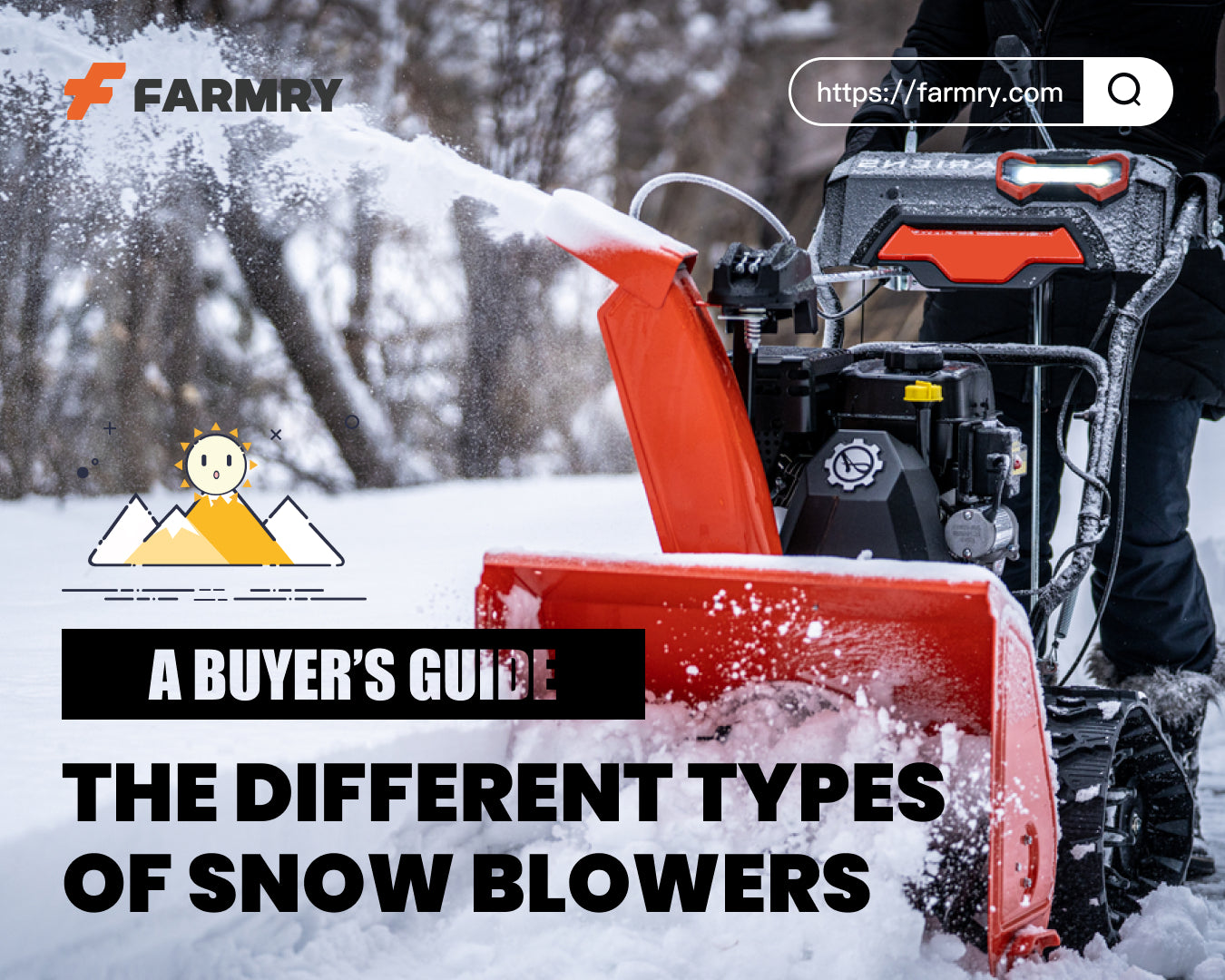
Farmry's SSB60 skid steer snow blower has a 60-inch cutting width, weighs approximately 940 lbs, and is designed around 16–21 GPM hydraulic flow.
Its hydraulic drive is rated around 3,000 PSI, and an optional electric chute-control configuration can introduce an additional electrical requirement.
Quickly switching attachments is one reason skid steers are often used for seasonal work.
This is a useful example of why powered skid steer attachments sometimes require one more compatibility check beyond the mount and hydraulics:
Does the machine also have the electrical connection or auxiliary control capability the attachment needs?
Some multifunction attachments use electrical connectors or control signals to operate extra functions. Connector types and pin configurations are not automatically interchangeable between every loader and attachment.
Skid Steer Attachment Compatibility Checklist Before You Buy
Use this checklist before ordering any skid steer, compact track loader, or compact track loader attachments to help confirm compatibility.
|
What to Check |
Question to Ask |
|---|---|
|
Machine type |
What exact machine do I own, and which skid steer models or loader details are required to confirm fit? |
|
Mount |
Does the machine's quick-attach interface match the attachment plate? |
|
Hydraulic flow |
Does my machine supply the attachment's required GPM range? |
|
Hydraulic pressure |
Is the machine's PSI compatible with the attachment specification? |
|
Couplers |
Do the hydraulic hoses and couplers match? |
|
Attachment weight |
Can the machine safely carry and control the attachment? |
|
Machine capacity |
What does the loader manufacturer specify for attachment, lift capacity, and operating limits? |
|
Controls |
Does the attachment require electrical connections, case drain, or additional hydraulic controls? |
|
Job requirement |
Is the attachment correctly sized for the work I actually need to perform? |
If you remember only one compatibility sequence, use:
Mount → Hydraulics → Weight/Capacity → Controls → Job
Checking these five areas against the operator's manual before purchase is much easier than discovering an incompatibility after a heavy attachment has already been delivered.
Farmry Skid Steer Attachment Compatibility Examples
The differences between actual Farmry attachments make the meaning of “universal” easier to see.
|
Farmry Model |
Type |
Mount / Connection |
Hydraulic Requirement |
Weight |
|---|---|---|---|---|
|
SSG24 |
Stump Grinder |
Skid-steer quick coupler |
18–23 GPM / 3,000 PSI |
573 lbs |
|
BHS700Pro |
Backhoe |
Universal SSL/CTL quick-attach |
5–7 GPM / 2,320 PSI |
1,197 lbs |
|
BHS820Pro |
Backhoe |
Universal SSL/CTL quick-attach |
5–7 GPM / 2,320 PSI |
1,254 lbs |
|
SSB60 |
Snow Blower |
Skid steer/loader mounting interface |
16–21 GPM / approx. 3,000 PSI |
940 lbs |
These attachments can all be used with compatible skid steer platforms, yet their hydraulic demands, weights, dimensions, and job requirements vary substantially. That is why the idea that skid steer attachments interchangeable is only partly true in practice.
That is the key idea behind skid steer attachment compatibility:
Interchangeable mounting does not guarantee interchangeable operation.
Before purchasing, check your exact skid steer models or steer loaders against the attachment specs to confirm compatibility, including the mounting interface, auxiliary hydraulic flow, hydraulic pressure, operating limits, couplers, and available controls.
Doing that first helps avoid poor performance, unnecessary adapter purchases, hydraulic problems, stability issues, and ordering the wrong attachment for the job.
FAQs
1. Are all skid steer attachments universal?
No. Most modern skid steers use a common quick-attach system, but a universal mounting plate does not mean every attachment is fully compatible with every machine. You still need to check hydraulic requirements, attachment weight, machine capacity, couplers, and controls. If you are comparing different attachment types, browse Farmry's skid steer attachments and check the specifications for each model.
2. How do I know if an attachment will fit my skid steer?
Start with your skid steer's exact make and model. Check the mounting interface first, then verify hydraulic GPM and PSI, attachment weight, machine operating capacity, hydraulic couplers, and any electrical requirements. Do not rely only on a product being labeled “universal” or “skid steer compatible.”
3. Does hydraulic flow affect skid steer attachment compatibility?
Yes. A hydraulic attachment must operate within the GPM and PSI range specified for that attachment. A quick-attach plate may fit correctly while the machine's hydraulic output is still unsuitable. For a more detailed explanation of flow, pressure, standard flow, and high flow, see Farmry's Skid Steer Attachment Hydraulic Flow: GPM & PSI Guide.
4. Does attachment weight affect skid steer compatibility?
Yes. Attachment weight affects stability, balance, lift performance, and how much usable capacity remains for the job. A heavy attachment may physically mount to a smaller skid steer but still be a poor match. Check the attachment's weight against your machine manufacturer's operating limits rather than treating quick-attach fit as proof of compatibility.
5. What should I check before buying a hydraulic skid steer attachment?
Before buying, check the quick-attach mount, required GPM, allowable PSI, hydraulic couplers, case-drain requirements if applicable, attachment weight, machine capacity, and electrical or auxiliary controls. Then confirm that the attachment is correctly sized for the work you plan to do. When comparing Farmry models, use the specifications listed in the skid steer attachments collection as a starting point and verify them against your machine's manual.
6. Can two attachments with the same quick-attach mount have different hydraulic requirements?
Yes. The quick-attach system determines physical mounting—not hydraulic compatibility. Two attachments can connect to the same skid steer plate while requiring very different GPM, PSI, coupler setups, or control functions. Always compare the hydraulic specifications separately before connecting or operating the attachment.