Skip to content



Heavy Duty Flail Mower: The Complete Guide for Tractor Owners

When it comes to managing brush, grass, weeds, and dense vegetation, choosing the right equipment makes all the difference. A heavy duty flail mower is one of the most versatile and durable solutions available for property owners, farmers, orchard operators, and contractors using tractors in the 25–75 HP range.
In this guide, we’ll break down how a flail mower works, what makes a model truly heavy duty, how to choose the correct width and category for your tractor, and why Farmry’s heavy duty series delivers superior performance across uneven terrain, slopes, orchards, trails, and ditches.
What Is a Heavy Duty Flail Mower?
A heavy duty flail mower is a PTO-driven mowing unit designed for tractors, built with reinforced components to handle thick brush, weeds, grass, and woody vegetation. Unlike lighter mowers, heavy duty construction allows the machine to operate in demanding conditions without excessive wear.
A standard flail mower uses a horizontal rotor equipped with multiple hammer blades or knife-style blades. As the rotor spins, the blade swing action allows each blade to pivot backward when hitting obstacles, reducing damage and protecting the rotor.
Heavy duty models are engineered with:
-
Reinforced side plate thickness
-
Heavy duty construction frame
-
Replaceable skid plates
-
Industrial-grade belts
-
Durable rear roller
-
Thick material housing
These features allow the unit to handle brush, vines, hedges, and even small saplings near trees without excessive debris being thrown.
How a Flail Mower Works
A flail mower connects to tractors using a 3-point hitch system, commonly Cat I or Cat II, and operates via a PTO shaft. When the PTO engages, power transfers from the tractor to the rotor through belts and pulleys.
The key components include:
-
PTO shaft for power transfer
-
Rotor assembly with hammer blades
-
Rear roller for height control
-
Side plates for structural support
-
Skid plates for ground protection
-
Belts that transmit power efficiently
The blade swing design allows the mower to handle obstacles and uneven terrain with greater ease compared to rigid blade systems. Instead of cutting in a single swing like rotary mowers, flail systems use multiple smaller blades for a smoother and more controlled cut.
Why Heavy Duty Construction Matters
Not all mowers are built the same. A true heavy duty flail mower includes:
-
Increased side plate thickness
-
Reinforced housing material
-
Heavy duty belts
-
Engineered rotor shaft
-
Durable rear roller assembly
These elements improve longevity and superior performance in difficult conditions like:
-
Ditches
-
Slopes
-
Trails
-
Fields
-
Orchards
-
Landscaping zones
Heavy duty construction reduces vibration, protects against debris impact, and allows the unit to handle thicker vegetation without strain.
Hammer Blades vs Blade Swing Systems
Hammer Blades
Hammer blades are ideal for:
-
Thick brush
-
Woody material
-
Dense weeds
-
Heavy vegetation
They provide aggressive cutting power and are suitable for land clearing and heavy mowing.
Blade Swing Advantage
The blade swing system allows blades to retract upon impact. This improves durability and reduces damage when encountering obstacles, rocks, or uneven ground.
For most heavy duty use, hammer blades are the preferred option due to their ability to handle brush and saplings effectively.
Hydraulic Offset and Side Shift Flexibility
One major advantage of modern heavy duty flail mower machines is hydraulic offset or hydraulic shift capability.
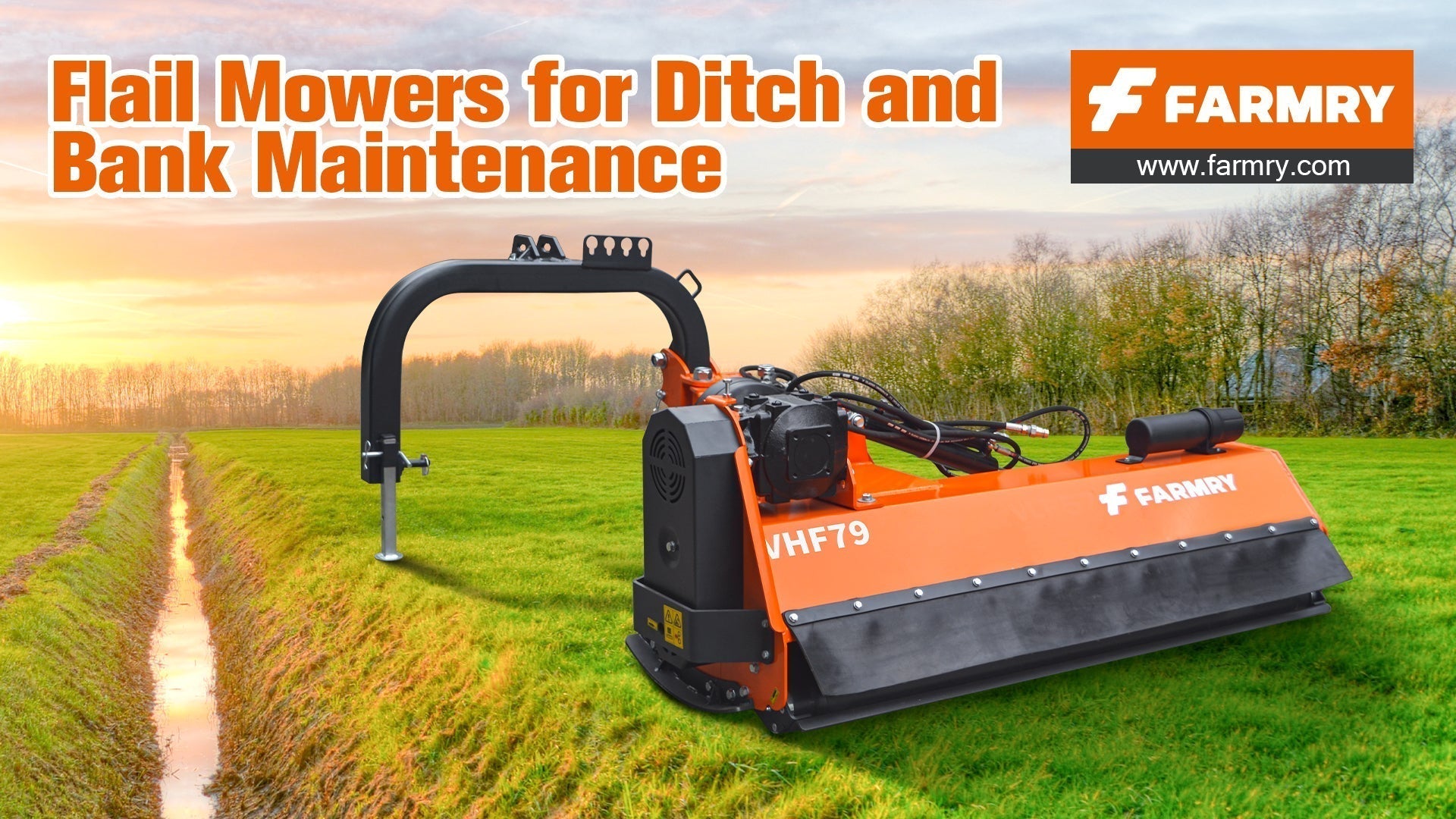
Hydraulic systems allow operators to shift the mower laterally from the center of the tractor. This flexibility is useful when mowing:
-
Ditches
-
Fence lines
-
Around trees
-
Orchard rows
-
Hedges
-
Trails
-
Along slopes
Hydraulic offset increases work efficiency by reducing repositioning and improving coverage.
Rear Roller and Cutting Control
The rear roller plays a critical role in:
-
Maintaining smooth cutting height
-
Stabilizing the mower
-
Preventing scalping
-
Improving finish quality
Combined with skid plates, the rear roller ensures consistent mowing across uneven terrain and helps the unit handle slopes with ease.
Choosing the Right Width and Overall Size
Selecting the correct width depends on:
-
Tractor power
-
PTO horsepower
-
Property size
-
Vegetation density
Key factors:
-
Overall width vs working width
-
Tractor compatibility (Cat I or Cat II)
-
PTO speed (commonly 540 RPM standard)
-
Hydraulic requirements
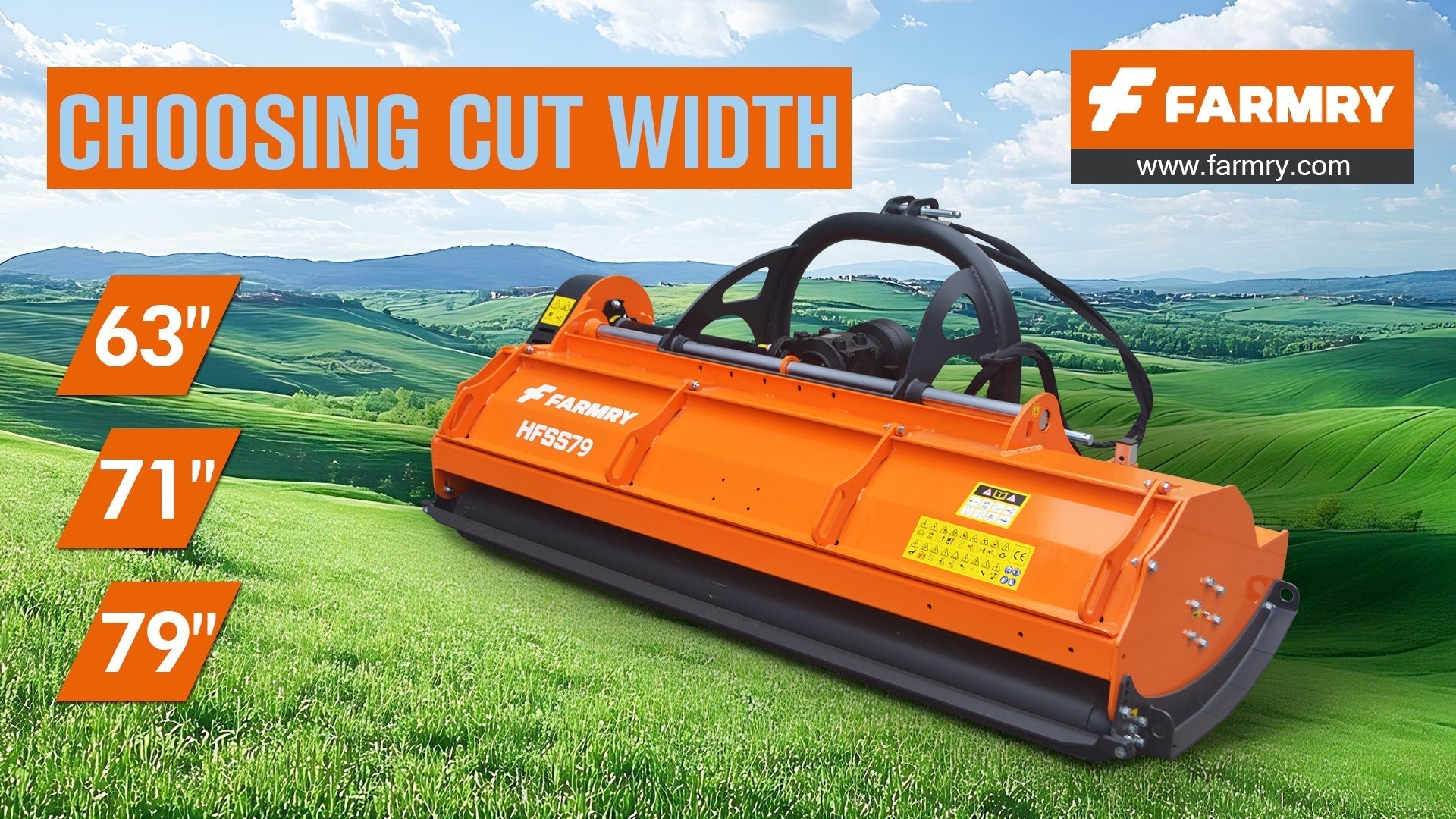
Wider units increase productivity but require sufficient power. Smaller tractors commonly pair well with Cat I compatible heavy duty flail mower models in the 57"–69" range.
Suitable Tractors and PTO Compatibility
Most Farmry heavy duty flail mower series are designed for:
-
25–75 HP tractors
-
Cat I or Cat II 3-point hitch
-
Standard 540 PTO
Always review your tractor’s PTO power rating before purchase. A properly matched unit improves performance and reduces strain on belts and drivetrain components.
Applications: Where Heavy Duty Flail Mowers Excel
A heavy duty flail mower is suitable for:
-
Landscaping projects
-
Orchard maintenance
-
Vineyards
-
Trails and paths
-
Ditches
-
Brush clearing
-
Fields
-
Hedgerows
Because debris is not widely thrown like with rotary systems, flail mowers are commonly used in areas near buildings or public spaces.
Flail Mower vs Rotary Cutter Comparison
|
Feature |
Flail Mower |
Rotary Cutter |
|---|---|---|
|
Cut Quality |
Smooth, fine cut |
Rougher cut |
|
Debris Control |
Minimal debris thrown |
Debris can be thrown far |
|
Safety |
Safer near buildings |
Higher projectile risk |
|
Uneven Terrain |
Handles slopes and obstacles well |
Less stable on uneven ground |
|
Maintenance |
More belts and parts |
Simpler blade system |
|
Ideal Use |
Landscaping, orchards, ditches |
Open field clearing |
Maintenance and Replacement Parts
To maintain superior performance:
-
Inspect belts regularly
-
Check PTO shaft lubrication
-
Replace hammer blades when worn
-
Monitor rear roller condition
-
Inspect side plates and skid plates
Having access to replacement parts ensures long-term reliability and reduced downtime.
Farmry Heavy Duty Flail Mower Series Overview
Farmry offers a comprehensive heavy duty flail mower series designed for US landowners and professionals.
The series includes:
-
Multiple width options
-
Cat I compatible units
-
Hydraulic shift models
-
Standard rear roller configurations
-
Heavy duty construction frames
Each category within the Farmry series is engineered for durability, flexibility, and long-term work performance. Before making a purchase, review the product page specifications carefully to match tractor power, width requirements, and hydraulic needs.
Farmry heavy duty flail mower models are available for sale across a practical price range depending on size and configuration.
Buying Guide: How to Choose the Right Unit
1. Tractor Size and PTO Power
Ensure your tractor’s PTO power matches the mower’s recommended range.
2. Width and Overall Width
Select a size that balances productivity and maneuverability.
3. Hydraulic Offset vs Standard
Choose hydraulic shift if mowing near ditches, hedges, or trees.
4. Construction Quality
Look for:
-
Heavy side plate thickness
-
Durable material
-
Reinforced housing
-
Engineered components
5. Price vs Performance
Higher price often reflects heavy duty construction and superior durability.
FAQs
1. What size heavy duty flail mower do I need?
The size depends on tractor horsepower and property scale. Smaller tractors commonly use 57–69 inch units, while larger tractors can handle wider machines.
2. What tractors are compatible?
Most heavy duty flail mower models are compatible with Cat I tractors and standard 540 PTO systems.
3. Is hydraulic offset necessary?
Hydraulic offset improves flexibility and efficiency when mowing ditches, slopes, and around obstacles.
4. Are hammer blades better?
Hammer blades are ideal for brush, weeds, and woody vegetation. They provide aggressive cutting and durability.
5. How does it handle brush and weeds?
Heavy duty construction and hammer blades allow the mower to handle dense vegetation and small saplings effectively.
6. How often should belts be replaced?
Belts should be inspected regularly and replaced depending on wear and work intensity.
Final Thoughts
A heavy duty flail mower offers durability, safety, and flexibility that standard mowers cannot match. Whether managing orchards, landscaping projects, fields, or ditches, the right unit ensures smooth performance and long-term value.
Explore theFarmry heavy duty flail mower series, review specifications carefully, and select a model designed to match your tractors, land, and work demands before making your purchase.