Skip to content



What Is a Hay Rake? A Complete Guide to Hay Rakes, Types, and How They Work
 If you work with hay, few machines are as essential—and as misunderstood—as the hay rake. Farmers new to hay production often ask: what is a hay rake, and why is it such a critical step between mowing and baling? While rakes may look simple, their design, operation, and performance have a direct impact on drying time, windrow shape, bale quality, and overall productivity.
This guide explains what a hay rake does, how different rake types work, and how to choose the right solution for your crop, tractor, and field conditions.
What Is a Hay Rake?
A hay rake is a piece of agricultural equipment used after mowing and before baling. Its primary job is raking hay into a windrow—a long, narrow row of cut crop—so the hay can dry evenly and be picked up efficiently by a baler.
A common misconception is that rakes are only used to move hay into piles. In reality, modern rakes are designed to lift, carry, spread, and depositing hay gently, forming a consistent windrow that helps hay dry faster, reduces contamination from dirt or stones, and improves bale quality.
Why Raking Hay Matters
Raking is not just about gathering hay—it’s about protecting crop value.
-
Proper raking exposes more surface area to air
-
Creates a fluffy windrow that promotes even drying
-
Reduces ash content by keeping hay off the ground
-
Helps the baler operate smoothly and consistently
In poor crop conditions or changing weather, correct raking can mean the difference between high-quality feed and spoiled hay.
The Basic Operation of a Hay Rake
During operation, the rake travels across the field, collecting cut hay from the swath and forming it into one windrow or combining multiple swaths into a larger windrow, depending on the working widths and setup.
Most rakes are:
-
Mounted to or pulled by a tractor
-
Either ground driven or PTO-powered
-
Designed to follow the ground closely without scraping
The operator can raise or lower the rake, adjust raking width, control windrow widths, and fine-tune performance based on crop type and dryness.
Main Hay Rake Types Explained
There are several rake types available today, each with different advantages, operating styles, and ideal use cases.
Wheel Rakes
Wheel rakes are among the most widely used hay rakes in the world due to their simplicity and productivity. They use multiple rotating wheels with spring steel tines that turn as they contact the ground.
Key characteristics of wheel rakes:
-
Ground driven, no PTO required
-
High forward speed for excellent productivity
-
Excellent for dry hay and large acreages
-
Available in multiple working widths
Modern high capacity wheel rakes can cover wide fields quickly and are capable of handling heavy crops with ease.
Deluxe Carted Wheel Rakes
Deluxe carted wheel rakes are an advanced version of standard wheel rakes. They feature a transport frame, enhanced wheel placement, and improved adjustment options.
Advantages include:
-
Wider raking width with stable transport
-
Better ground following on uneven fields
-
Consistent windrow formation at higher speed
-
Reduced operator fatigue
These machines are ideal for operators seeking higher performance without PTO complexity.
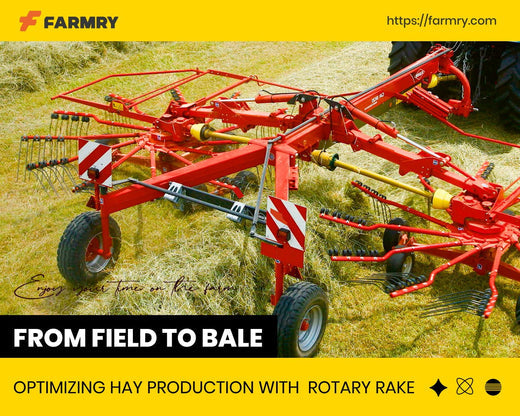
Rotary Rakes
Rotary rakes use powered arms with tines rotating around a central gearbox, typically driven by PTO.
Key features of rotary rakes:
-
Gentle raking action that protects delicate crops
-
Lower ash content due to minimal ground contact
-
Excellent for alfalfa and leafy crops
-
Produces a very uniform windrow
Rotary rakes are often preferred where crop quality is prioritized over maximum speed.
Side Delivery Rake
A side delivery rake moves hay to one side of the machine, forming a continuous windrow. While more traditional, this style still has practical uses.
Benefits include:
-
Simple operation
-
Effective for smaller fields
-
Works well behind smaller tractors
Choosing the Right Rake for Your Crop
Different crops and moisture levels require different approaches.
Dry Hay vs Wet Hay
-
Dry hay can be raked aggressively and at higher speeds
-
Wet hay requires gentler handling to avoid clumping and spoilage
Rakes with flexible tines and adjustable settings help adapt to changing weather.
Crop Type and Density
Heavy grass hay, mixed forage, and alfalfa each respond differently to raking. Dense crop requires:
-
Strong tines
-
Stable wheels
-
Even lifting and depositing
How Hay Rakes Affect Windrows
The shape and structure of the windrow influence drying and baling efficiency.
A good windrow should:
-
Be uniform from end to end
-
Avoid piles that trap moisture
-
Match the baler pickup width
Adjusting working widths, rake angle, and speed helps achieve optimal results.
Hay Rakes vs Tedders
A tedder spreads hay across the field to speed drying, while a hay rake gathers it.
Key difference:
-
Tedder = fluff and spread
-
Rake = gather and shape
In many operations, both machines are used: tedding first, raking later.
Ground Contact, Dirt, and Stones
One major job of a hay rake is keeping hay clean.
Good rake design helps:
-
Lift hay off the ground
-
Avoid dragging dirt into the windrow
-
Reduce contamination from stones
This directly impacts forage quality and equipment wear.
Tractor Compatibility and Power
Most hay rakes work with a wide range of tractor sizes.
-
Ground-driven rakes require minimal horsepower
-
PTO-powered rakes need correct PTO speed
-
Mounted vs pull-type depends on tractor and field size
Matching the rake to the tractor improves safety and performance.
Productivity and Field Efficiency
A well-matched rake improves:
-
Field speed
-
Baling efficiency
-
Overall productivity
Fewer passes across the field save fuel, time, and wear on equipment.
Common Misconceptions About Hay Rakes
One common misconception is that faster raking always equals better performance. In reality, speed must match crop density, moisture, and rake design.
Another misconception is that all rakes perform the same. Differences in tines, wheels, frame design, and adjustment options create major differences in results.
Adjustments and Daily Operation Tips
For successful operation:
-
Adjust rake height carefully
-
Monitor tine contact with the ground
-
Avoid over-raking dry crop
-
Watch weather changes closely
A skilled operator can significantly improve final bale quality.
Advantages of Using the Right Hay Rake
Choosing the right rake offers clear advantages:
-
Better drying
-
Cleaner hay
-
Improved baler performance
-
Higher quality bales
These factors contribute directly to long-term success in hay production.
Exploring Hay Rake Models and Styles
There are many models available, each designed for specific field sizes and workloads. Exploring different styles helps operators find a solution that matches their goals, from small farms to larger operations.
Final Thoughts: Why the Hay Rake Matters
A hay rake may seem simple, but it plays a central role in the haymaking process. From shaping the windrow to protecting crop quality, the right rake improves efficiency, reduces losses, and supports consistent results in the field.
Understanding what is a hay rake, how different rake types work, and how to operate them correctly empowers farmers to make smarter equipment decisions—and get the most value from every cutting of hay.